
The outlook
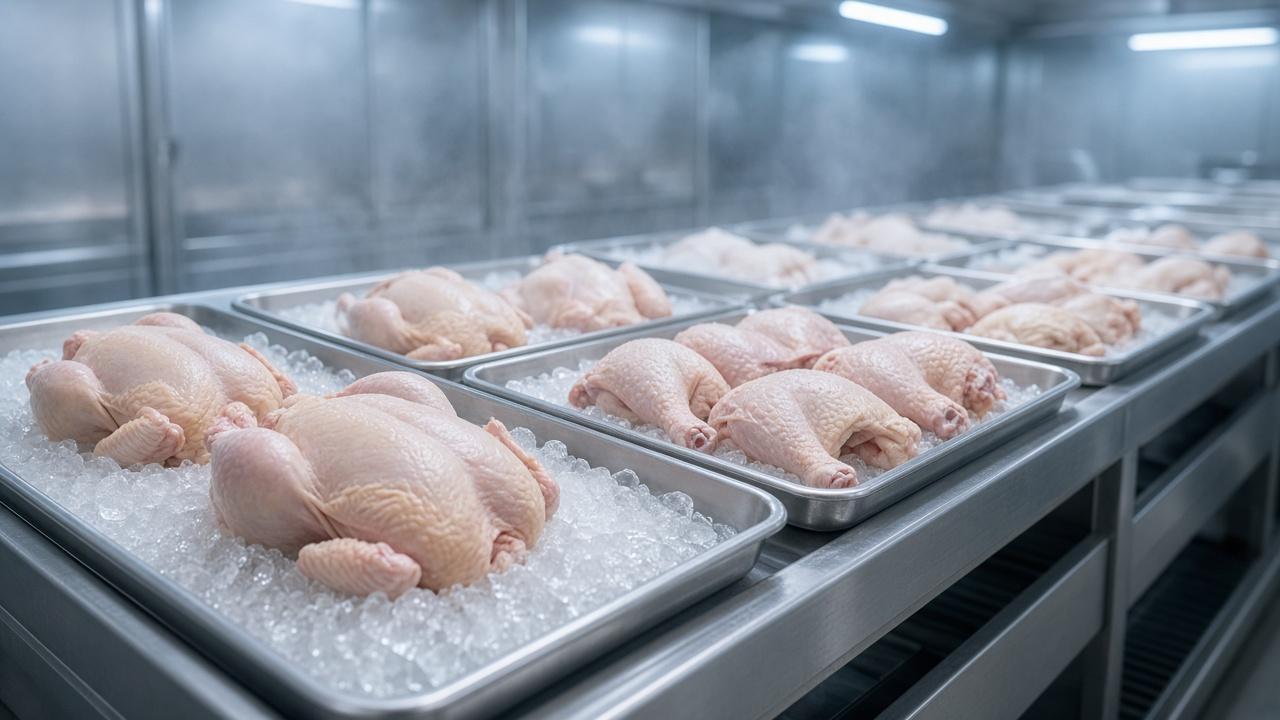
In short: USDA forecasts UAE chicken consumption at 485,000 metric tons in 2027, after an estimated 425,000 metric tons in 2026. Local production stays at about 75,000 metric tons. Imports for domestic consumption rise from 350,000 to 410,000 metric tons.
Demand is growing faster than domestic supply can expand. The 2026 setback came mainly from regional geopolitical disruption and shipping constraints that interrupted import flows, not from a weaker appetite for poultry.
- 485,000 MT2027 consumption
- 75,000 MTLocal production, flat
- 410,000 MTImports, about +17%
This outlook is dated 10 November 2026. It is the year-ahead picture for producers, retailers, hotels, and procurement teams in Dubai, Abu Dhabi, Sharjah, and the Northern Emirates. The October availability note covers the near-term squeeze from fuel, feed, and small farms. The 2026 shortage article covers the earlier market shock. This post is the annual forecast.
Against 2027 consumption of 485,000 MT, domestic production covers about 15 percent of national demand. In the tighter 2026 year, the same 75,000 MT was closer to 18 percent of a smaller market. Imported poultry is expected to supply about 85 percent of UAE chicken in 2027.
The numbers behind the outlook
Figures below are ready-to-cook chicken meat from the USDA Foreign Agricultural Service annual for the UAE. 2026 is an estimate. 2027 is a forecast. Local production plus imports for domestic consumption equals total consumption in each year of this table.
| Line | 2025 | 2026 estimate | 2027 forecast |
|---|---|---|---|
| Local production | 70,000 MT | 75,000 MT | 75,000 MT |
| Imports for domestic consumption | 400,000 MT | 350,000 MT | 410,000 MT |
| Total domestic consumption | 470,000 MT | 425,000 MT | 485,000 MT |
Source: USDA FAS Dubai, Poultry and Products Annual, GAIN TC2026-0010, 5 October 2026. Figures are report estimates and forecasts.
The import step from 350,000 MT to 410,000 MT is about 17 percent. 75,000 MT of local production plus 410,000 MT of imports is the 485,000 MT consumption forecast.
Why local production stays flat
The report points to high feed and energy costs, limited arable land, water scarcity, and harsh climate. These are structural constraints, so the UAE's dependence on international poultry supply is unlikely to disappear soon.
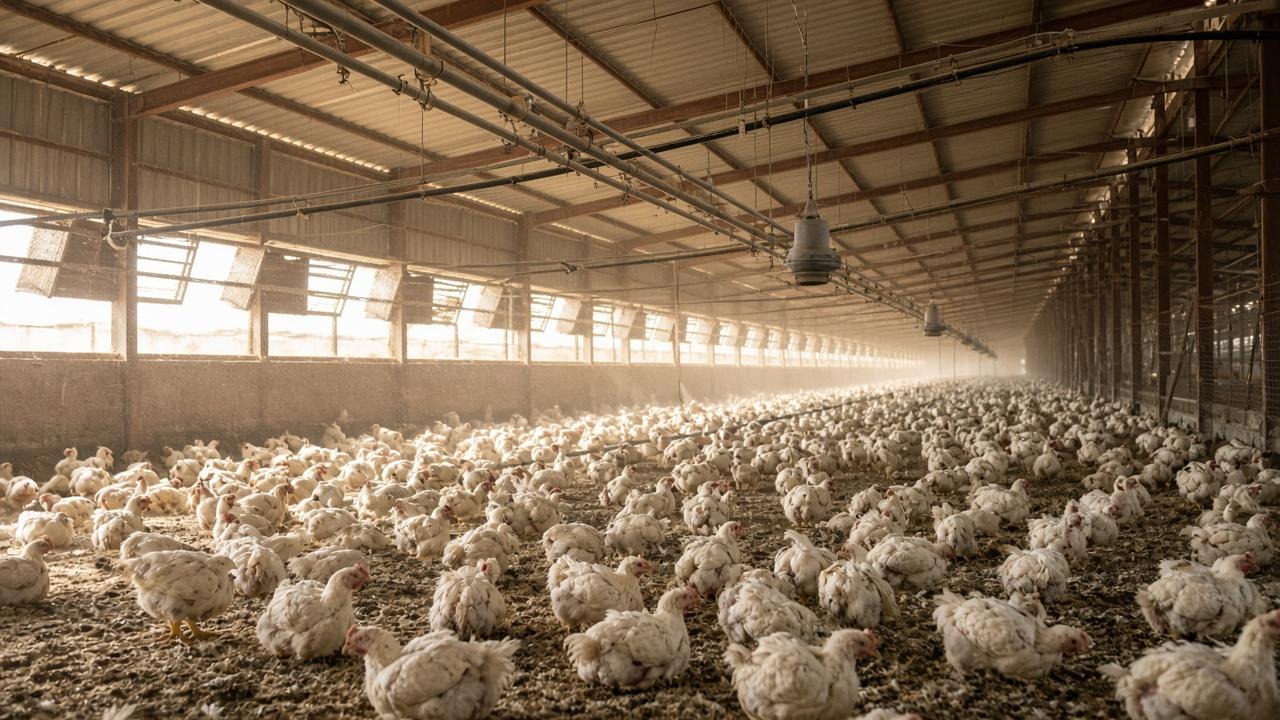
That dependency also defines the opening for local producers. With imports covering most volume, UAE-grown poultry can compete where it has a natural advantage:
- Fresh and chilled availability
- Shorter supply chains and faster replenishment
- Local provenance and consumer trust
- Consistent quality and food-safety positioning
- Premium, welfare, sustainability, and traceability credentials
The Premium Food Mark for locally produced chilled chicken in Abu Dhabi covers farming, feed, slaughter, processing, packaging, distribution, animal welfare, sustainability, and final-product quality. Its commercial value depends on consumer recognition and how the standard is run. It gives local chicken a clearer way to stand apart from commodity imports. Batch checks for supported codes sit on Zad Verify, with the buyer framework on meat traceability.
What is driving the 2027 rebound
Construction, tourism, and the hotel, restaurant, and institutional sector support the rebound. Poultry is a core, adaptable protein for a large expatriate population and a diverse foodservice market.
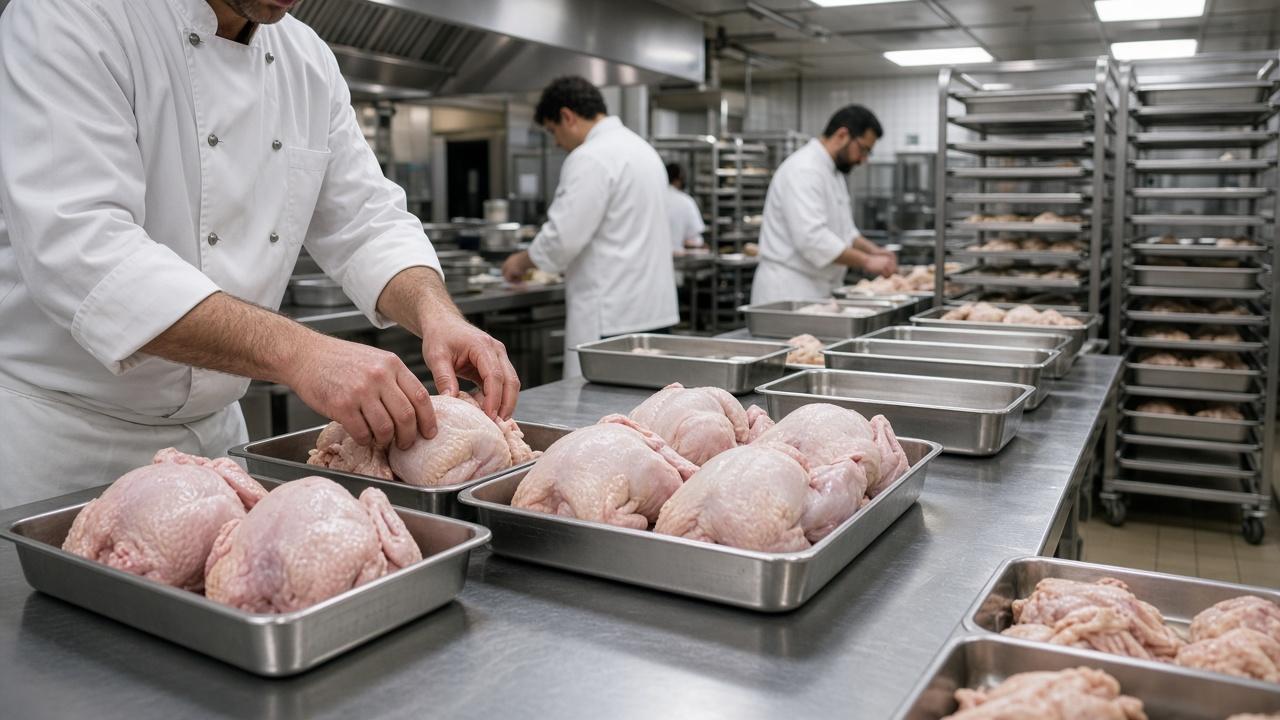
USDA notes particularly strong demand for imported frozen leg quarters in bulk kitchens and worker accommodations, including those serving real-estate and construction workforces. Whole and half birds matter especially for Arab consumer preferences, and they support demand for fresh and chilled local broilers. How a kitchen should choose between the two formats is covered in frozen vs fresh chicken for UAE restaurants.
Ramadan will lift the season. Ramadan 2027 is expected to begin around 8 February. Importers are expected to build inventory from October and November 2026 for December and early-January arrivals. Retailers, foodservice operators, and local producers should plan promotions, production, and inventory before that window, not in the week service starts.
Imports stay central
Brazil and the United States remain the primary international supply sources named in the report. USDA does not publish a supplier-by-supplier market-share table here, so this article does not assign country shares. What the data establishes is the structure: imports are about five-sixths of UAE chicken supply.
The 2026 disruption showed why route flexibility is now a commercial question. Khorfakkan and Fujairah are alternative east-coast entry points outside the Strait of Hormuz. Temporary customs facilitation and overland routes through Oman or Saudi Arabia can keep product moving. Proposed east-coast port capacity and Etihad Rail could improve resilience over time.
For importers, procurement has to account for routing, cold-chain continuity, customs documentation, halal certification, and lead times — not only price. Temperature control on the longer leg is covered in cold chain meat delivery. The buyer checklist for halal records is in halal traceability for meat supply.
Where local chicken can win
The strongest local opportunity is not to replace imports in a single year. It is to hold the parts of the market where fresh local production does something frozen imported poultry does not.
- Premium fresh and chilled chicken
- Reliable supply for modern retail and foodservice
- Quality-led differentiation under the new grading framework
- Origin, traceability, animal welfare, and sustainability
- Seasonal programmes for Ramadan and other high-demand periods
- Partnerships with restaurants, hotels, caterers, and institutional kitchens that want a dependable local line
Current fresh lines are on fresh chicken. Programme coverage for commercial buyers is on wholesale fresh chicken supplier UAE. Specs and delivery windows are confirmed through Contact.
The bottom line
The USDA outlook describes a UAE poultry market that is recovering, expanding, and still import-dependent. Consumption is forecast at 485,000 MT in 2027. Local output stays near 75,000 MT.
For the local sector, that is a reason to compete on freshness, quality, trust, and supply reliability, while imports continue to provide the volume backbone of the market.
Report facts in this article are drawn from the USDA Foreign Agricultural Service, Dubai, Poultry and Products Annual — United Arab Emirates, GAIN TC2026-0010, 5 October 2026. The implications for local producers and buyers are editorial analysis.